News Summary
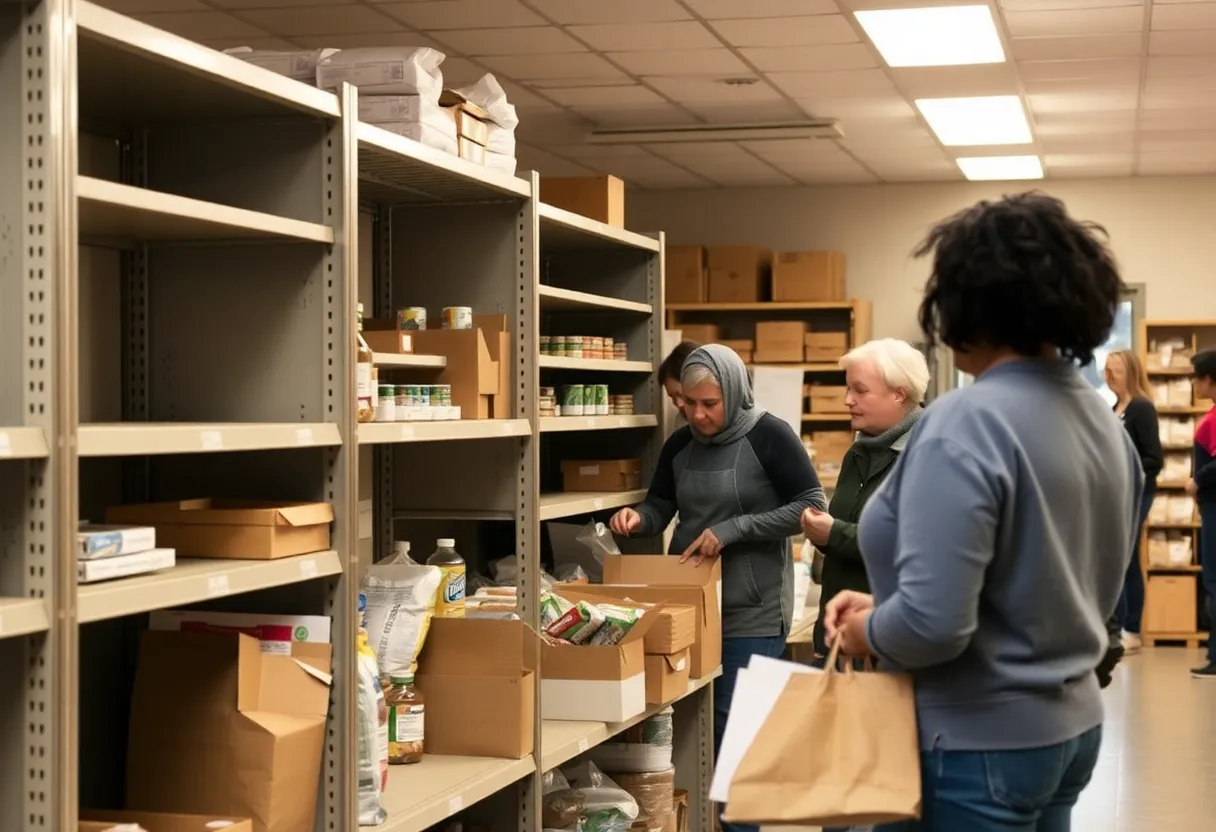
Food pantries across the Carolinas are struggling to meet rising demands due to cuts in USDA food assistance programs. Organizations like Champion House of Care report a significant drop in people served, anticipating increased pressure during the summer months. With community donations dwindling and federal funding cuts, pantry leaders express concern over the future of food assistance services, particularly for children who rely on school meals. Advocates are urging public support to restore essential funding to combat growing food insecurity.
Charlotte – Food pantries across the Carolinas are facing a crisis as recent cuts to USDA food assistance programs force many to turn families away. This alarming trend is significantly impacting communities, with organizations struggling to provide the essential services needed to combat food insecurity.
Champion House of Care in Charlotte has reported a drastic decrease in the number of people served, dropping from nearly 600 individuals each week to around 300. The Executive Director indicated that, on one occasion, six people had to be turned away in a single day due to a lack of food supplies. This reflects a broader pattern among food pantries in the region, including those in Rock Hill and Fort Lawn, which are also grappling with diminished federal food assistance.
With the closure of schools for the summer, pantry leaders anticipate that the demand for food assistance will only increase. Many children who rely on school meals will lack access to the nutrition they need during the break. Food pantries are now seeking avenues to provide these essential meals, particularly for the children in their communities.
To cope with the increased demand, organizations are relying heavily on community donations and are actively promoting food drives. However, without additional support, there is a genuine concern that they may have to cancel Thanksgiving and Christmas meals for the first time due to funding shortages.
Across the Carolinas, food banks are reporting significantly lighter deliveries from partners like Second Harvest Food Bank due to cuts in federal funding. The cuts include a reduction of $500 million from food banks and $660 million from school food programs. This has led to emotional distress among food pantry directors who highlight the inadequacy of supplies available for those in need.
In total, approximately 4,000 individuals serviced by CARE to Share Outreach may lose reliable access to food as a result of the current funding challenges. Clients, such as Karen Caldwell, have noted a decline in both the quality and quantity of food received from pantries, with boxes that were once filled with nutritious options now more often containing pastries and shelf-stable snacks.
The USDA’s funding cuts have compelled local farmers to scale back their production, further jeopardizing food bank supplies. Second Harvest has confirmed that the reduction in federal funding has indeed influenced the amount of food being distributed to local pantries, intensifying the already grave situation.
Community leaders are urging the public to advocate for the reinstatement of essential funding programs. The USDA has recently canceled various pandemic-era initiatives designed to connect local agriculture with food banks and schools, further complicating the challenges that food pantries face.
The effects of food insecurity are evident, with Nourish Up, a local food assistance organization, serving over 164,000 people in 2024 alone—a 19% increase from the previous year. This data underscores the growing food insecurity challenges faced by families across the Carolinas, as many grapple with health issues exacerbated by limited access to fresh food.
Additionally, Charlotte-Mecklenburg Schools have reportedly felt the impacts of federal funding cuts, leading to a potential surge in demand for food assistance services in the coming months. The USDA has acknowledged that the funding reductions are part of a broader shift in focus towards long-term nutritional solutions rather than merely addressing short-term needs established during the pandemic.
As food pantries navigate these challenges, the reliance on community support and advocacy for reinstated funding is more crucial than ever in order to ensure that families in need continue to receive essential food assistance.
Deeper Dive: News & Info About This Topic
HERE Resources
Local Woman Wins $200,000 in South Carolina Lottery
Wildfires Devastate Western North Carolina and Prompt Evacuations
Nebraska Becomes First State to Ban Soda Purchases in SNAP
Republicans Push Through Tax Cuts and Border Security Plan
Tragedy Strikes Southern Kentucky: Tornado Claims Lives and Damages Communities
New Legislation Aims to Support Small Businesses Impacted by Road Construction
Kershaw Faces Change as ADM Shuts Soybean Processing Plant
Job Growth Projected for Rock Hill Over the Next Decade
Wildfires Rage Through Carolinas, Evacuations Intensify
Harvard Goes Tuition-Free for Many Families Starting 2025
Additional Resources
- WCNC: USDA Cuts Impact on Food Pantries in NC & SC
- Charlotte Observer: Impact of Federal Cuts on Food Assistance
- WSOCTV: USDA Cuts Deepening Food Insecurity
- Charlotte Football Club: Food Bank Donations Announcement
- News Observer: Federal Cuts and Food Insecurity
- Wikipedia: Food Insecurity
- Google Search: Food Assistance
- Google Scholar: Food Insecurity
- Encyclopedia Britannica: Food Insecurity
- Google News: Food Pantries North Carolina


Author: STAFF HERE ROCK HILL
The ROCK HILL STAFF WRITER represents the experienced team at HERERockHill.com, your go-to source for actionable local news and information in Rock Hill, York County, and beyond. Specializing in "news you can use," we cover essential topics like product reviews for personal and business needs, local business directories, politics, real estate trends, neighborhood insights, and state news affecting the area—with deep expertise drawn from years of dedicated reporting and strong community input, including local press releases and business updates. We deliver top reporting on high-value events such as the Come-See-Me Festival, Rock Hill Arts Festival, and motorsport events at the Rock Hill Velodrome. Our coverage extends to key organizations like the Rock Hill Chamber of Commerce and the Culture & Heritage Museums, plus leading businesses in manufacturing and technology that power the local economy such as 3D Systems and Comporium. As part of the broader HERE network, including HEREAiken.com, HEREBeaufort.com, HEREChapin.com, HERECharleston.com, HEREClinton.com, HEREColumbia.com, HEREGeorgetown.com, HEREGreenwood.com, HEREGreenville.com, HEREHiltonHead.com, HEREIrmo.com, HEREMyrtleBeach.com, HERENewberry.com, HERERockHill.com, and HERESpartanburg.com, we provide comprehensive, credible insights into South Carolina's dynamic landscape.