Los Angeles, September 9, 2025
News Summary
The U.S. Supreme Court has reversed a lower court ruling, permitting the Trump administration to continue immigration stops in Los Angeles based on race and language. This ruling, which faced strong dissent from several justices, raises significant concerns regarding civil rights and the potential for racial profiling in immigration enforcement. The previous restrictions, which contributed to a notable decrease in immigration arrests, have now been lifted, allowing greater leeway for immigration officers in their operations.
Los Angeles
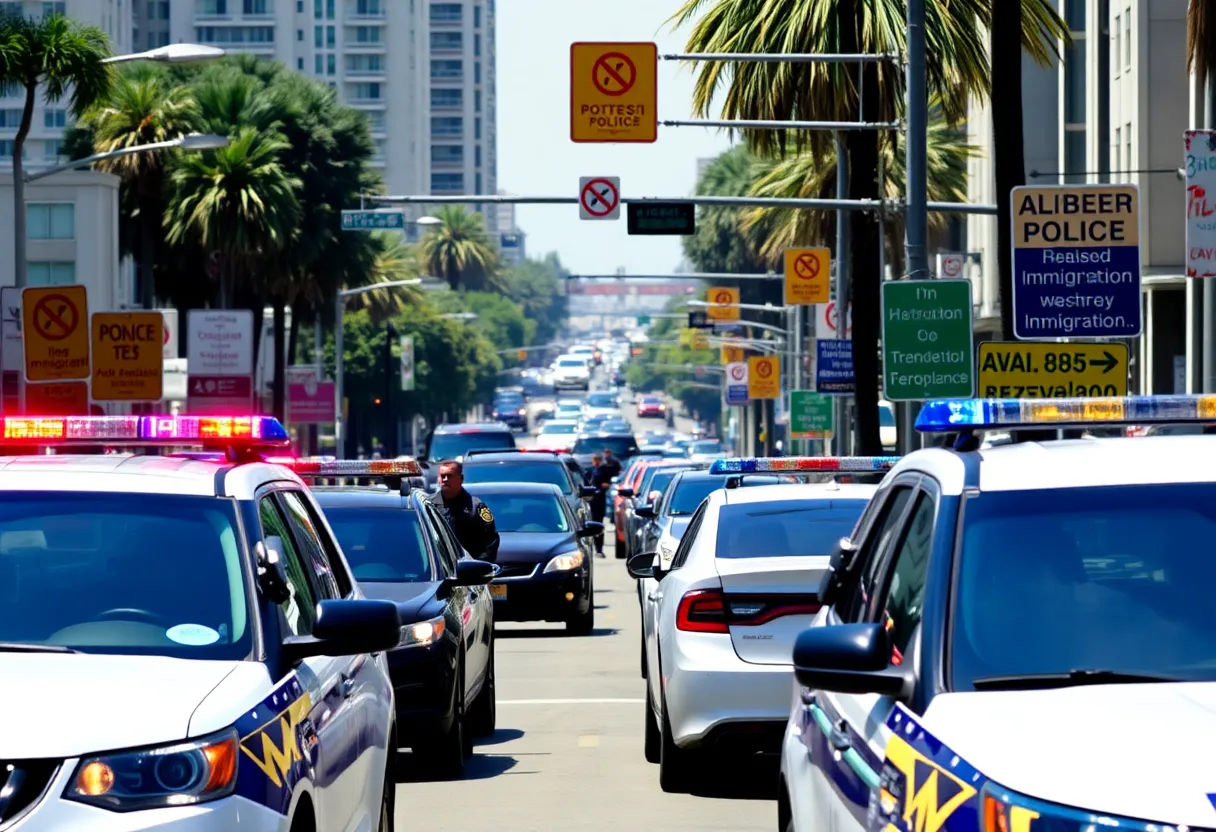
On Monday, the U.S. Supreme Court granted the Trump administration permission to continue immigration stops in Los Angeles based on race and language factors, reversing restrictions established by a federal judge. This decision presents significant implications for immigration enforcement and civil rights in the region.
The ruling followed a request from the Trump administration, which argued that the previous court order represented an unreasonable limitation on law enforcement practices. The decision emerged from a 6-3 split among the justices, although the court did not disclose individual votes in this emergency order case.
Justice Brett Kavanaugh wrote a concurring opinion, indicating that the plaintiffs may not have had legal standing to challenge the administration’s policies. Meanwhile, Justice Sonia Sotomayor expressed strong dissent, referring to the court’s ruling as “unconscionably irreconcilable” with the constitutional protections afforded to individuals. Justices Elena Kagan and Ketanji Brown Jackson joined her dissent, emphasizing concerns regarding the impact on minorities and immigrant communities.
The Supreme Court’s decision overturned a previous ruling made in July by U.S. District Judge Maame Ewusi-Mensah Frimpong, which restricted immigration officers from employing race, language, profession, or location as bases for stops. Frimpong’s ruling was partly due to concerns regarding potential violations of the Fourth Amendment, which protects against unreasonable searches and seizures.
This ruling applies to the Central District of California, a region with over 20 million residents and a significant population of undocumented immigrants. Following Judge Frimpong’s ruling, immigration arrests reportedly decreased by 66%, raising questions about the effectiveness and fairness of immigration enforcement strategies. The Department of Homeland Security asserted that it would proceed with enforcement operations, specifically targeting individuals identified as criminal illegal aliens.
The legal dispute involved the American Civil Liberties Union (ACLU) and associated organizations, underscoring the potential for racial profiling within immigration enforcement policies. Local jurisdictions have rallied behind the plaintiffs, arguing that the government’s approach contradicts fundamental American values and principles of justice and equality.
While the Supreme Court did not provide an exhaustive rationale for its decision—typical in cases involving emergency dockets—the legal landscape surrounding immigration enforcement remains contentious. Kavanaugh highlighted that law enforcement could establish “reasonable suspicion” based on the demographic characteristics of communities in the area, suggesting that such context may warrant investigative actions.
Historically, the Trump administration has experienced a degree of success in Supreme Court cases related to immigration policy. However, this case is ongoing, with further hearings anticipated in lower courts intended to address the broader legalities surrounding immigration operations and their enforcement.
Frequently Asked Questions
What was the Supreme Court’s ruling about?
The Supreme Court ruled in favor of the Trump administration, allowing immigration stops in Los Angeles to be based on factors such as race and language, lifting restrictions from a lower court.
Who issued the initial restrictions on immigration stops?
The initial restrictions were imposed by U.S. District Judge Maame Ewusi-Mensah Frimpong due to concerns of potential Fourth Amendment violations.
What did the dissenting justices argue?
Justice Sonia Sotomayor and her fellow dissenting justices argued that the ruling was inconsistent with constitutional protections and raised serious risks of racial profiling.
How does this decision affect immigration enforcement in Los Angeles?
The decision allows immigration officers greater freedom to make stops based on race and language, potentially increasing immigration arrests in the area.
What impact did the previous restrictions have on immigration arrests?
Following the imposition of restrictions by Judge Frimpong, immigration arrests in Los Angeles reportedly fell by 66%.
What organizations were involved in the lawsuit against the Trump administration?
The lawsuit included the American Civil Liberties Union (ACLU) and other civil rights organizations that aimed to address potential racial profiling in immigration enforcement.
Key Features of the Supreme Court Ruling
| Feature | Details |
|---|---|
| Decision Date | Monday |
| Supreme Court Vote | 6-3 in favor of lifting restrictions |
| Previous Judge | U.S. District Judge Maame Ewusi-Mensah Frimpong |
| Impact on Arrests | Immigration arrests fell by 66% post-restrictions |
| Main Legal Concerns | Potential Fourth Amendment violations and racial profiling |
Deeper Dive: News & Info About This Topic
HERE Resources
Rock Hill Mayor Race Takes a Turn as Roddey Withdraws
California’s Economy Depends Heavily on Immigrant Labor
Nationwide ‘Workers Over Billionaires’ Protests Ignite Across America
Immigration Raids Impact Farmworkers in California
California Political Leaders Tackle Big Issues at Summit
Big Win for Sanctuary Cities as Federal Judge Blocks Funding Cuts
Rock Hill Schools Launch Dual Language Immersion Program
Border Patrol Sparks Controversy in Los Angeles
Trump Administration Proposes National Guard Quick Reaction Force
Trump Nominates Tammy Bruce for Deputy UN Representative
Additional Resources
- NBC News
- Wikipedia: Supreme Court of the United States
- Los Angeles Times
- Google Search: Supreme Court immigration stops
- New York Times


Author: STAFF HERE ROCK HILL
The ROCK HILL STAFF WRITER represents the experienced team at HERERockHill.com, your go-to source for actionable local news and information in Rock Hill, York County, and beyond. Specializing in "news you can use," we cover essential topics like product reviews for personal and business needs, local business directories, politics, real estate trends, neighborhood insights, and state news affecting the area—with deep expertise drawn from years of dedicated reporting and strong community input, including local press releases and business updates. We deliver top reporting on high-value events such as the Come-See-Me Festival, Rock Hill Arts Festival, and motorsport events at the Rock Hill Velodrome. Our coverage extends to key organizations like the Rock Hill Chamber of Commerce and the Culture & Heritage Museums, plus leading businesses in manufacturing and technology that power the local economy such as 3D Systems and Comporium. As part of the broader HERE network, including HEREAiken.com, HEREBeaufort.com, HEREChapin.com, HERECharleston.com, HEREClinton.com, HEREColumbia.com, HEREGeorgetown.com, HEREGreenwood.com, HEREGreenville.com, HEREHiltonHead.com, HEREIrmo.com, HEREMyrtleBeach.com, HERENewberry.com, HERERockHill.com, and HERESpartanburg.com, we provide comprehensive, credible insights into South Carolina's dynamic landscape.