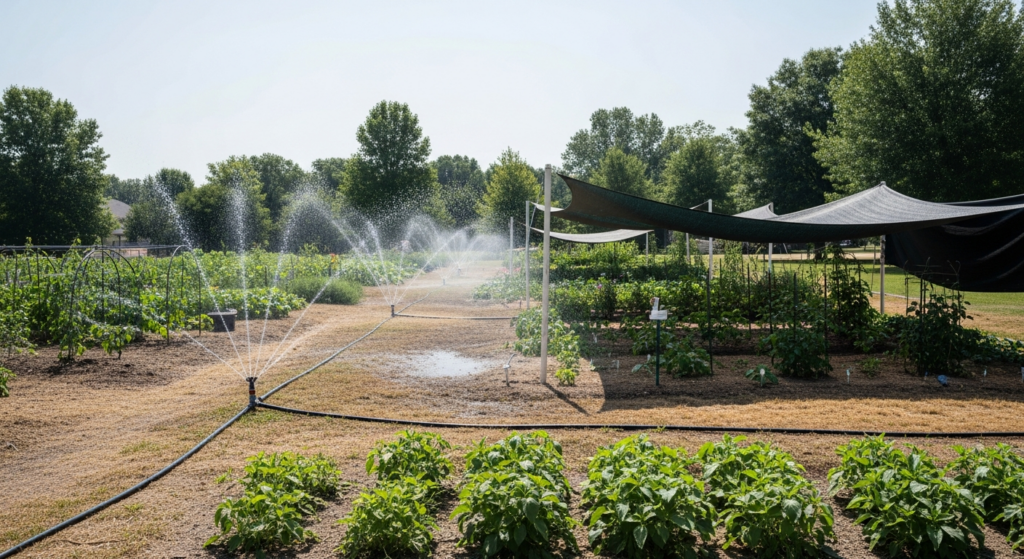
Gardeners in Rock Hill and across York County are adapting their routines to protect plants from the sustained heat, with experts emphasizing specific watering and shading techniques. The current weather patterns, typical of summer in the Piedmont region, necessitate careful attention to plant health.
Guidance from gardening resources highlights the importance of deep, infrequent watering. Instead of light daily sprinkles, plants benefit more from thorough soaks that penetrate the soil deeply. This encourages roots to grow further down, making them more resilient to dry surface conditions. The recommended frequency is about one inch of water per week, delivered in several deep applications rather than a single heavy one.
Timing is also a critical factor. Watering in the cooler parts of the day, specifically in the morning, is advised. This allows the water to soak into the soil before the intense midday sun causes rapid evaporation, ensuring maximum absorption by the plants. Watering when the soil itself is cooler also reduces stress on the plants.
Beyond watering, strategic use of shade can significantly mitigate heat stress. For sensitive plants or those in particularly exposed areas, temporary shading solutions can provide relief. This might involve using shade cloths or repositioning potted plants to areas that receive afternoon shade. For plants already showing signs of stress, a triage approach is recommended, focusing resources on the most valuable or salvageable specimens.
These practices are particularly relevant for home gardeners throughout Rock Hill, where a variety of ornamental and edible plants face the challenges of the season.
### Why it matters in Rock Hill
The principles of heat-wave gardening are critical for maintaining vibrant landscapes and productive gardens throughout Rock Hill. Institutions like Glencairn Garden, a prominent public green space, rely on diligent watering and plant care strategies to preserve its diverse collections through the summer months. For individual homeowners in neighborhoods such as Riverwalk or Manchester Village, adopting these methods can mean the difference between thriving greenery and struggling plants, impacting both property aesthetics and the enjoyment of outdoor spaces. The collective effort of Rock Hill residents to adapt their gardening practices contributes to the overall health and beauty of the city’s environment, ensuring that green spaces remain resilient against the summer heat.