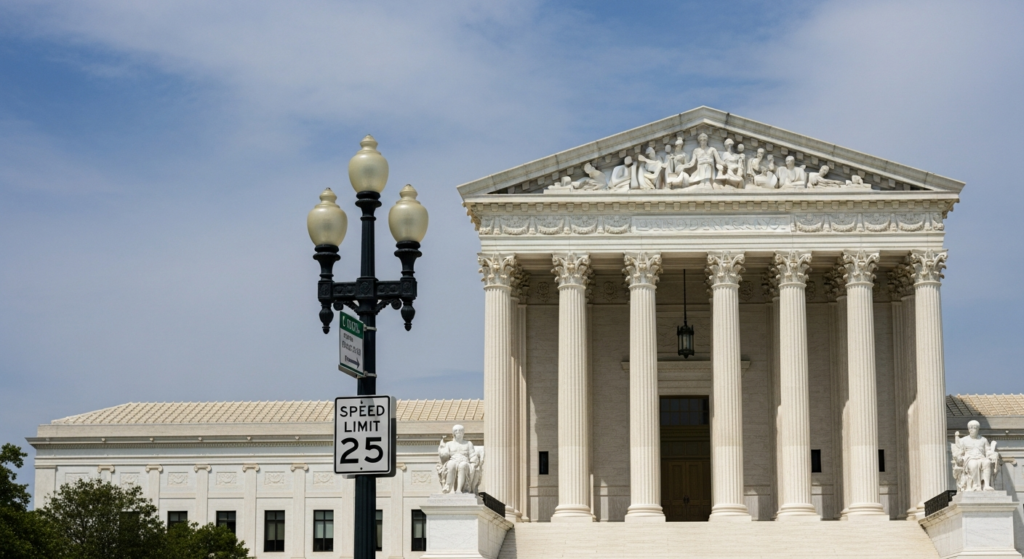
The United States Supreme Court is preparing for a term laden with cases that could reshape fundamental aspects of American law and society, addressing issues ranging from gun control to voting rights and religious freedom. These forthcoming decisions, expected to unfold over the next year, will be closely observed by legal scholars, policymakers, and residents in Rock Hill and across York County.
The Court’s docket for the upcoming term includes several high-stakes disputes that touch upon core constitutional claims and federal government litigation. Among the most prominent are cases challenging restrictions on assault-style rifles, questions surrounding the parameters of voter-registration rules, complex issues at the intersection of LGBT rights and religious freedom, and procedural matters related to immigration detention.
One of the most anticipated areas of contention involves the Second Amendment, with cases set to examine the legality of state-level restrictions on assault-style rifles. These cases follow a series of rulings that have expanded gun rights, and the Court’s willingness to revisit the scope of permissible firearm regulations could have far-reaching consequences. For residents of York County, where gun ownership is a significant aspect of culture for many, and where law enforcement agencies like the York County Sheriff’s Office and the Rock Hill Police Department navigate existing state and federal gun laws, these decisions will be particularly salient. Any ruling could influence legislative debates at the state level in South Carolina and impact how local communities approach gun safety and enforcement.
Another critical set of cases on the docket will delve into voter-registration rules, potentially impacting how elections are administered across the country. These disputes often involve questions of access, security, and the balance of power between state and federal election authorities. In Rock Hill, the York County Board of Voter Registration and Elections is responsible for maintaining accurate voter rolls and facilitating the electoral process. Decisions from the Supreme Court could mandate changes to their procedures, affect voter turnout, and alter the landscape of political participation for citizens in Rock Hill and surrounding communities. The integrity and accessibility of voting are perennial concerns, and the Court’s pronouncements will undoubtedly draw significant attention from local political groups and everyday voters.
The intersection of LGBT rights and religious freedom also features prominently in the upcoming term. These cases typically involve conflicts between anti-discrimination protections for LGBTQ+ individuals and claims by religious organizations or individuals seeking exemptions based on their beliefs. Such rulings could have profound implications for workplaces, public accommodations, and educational institutions. Major employers in Rock Hill, such as Piedmont Medical Center and Winthrop University, operate with their own non-discrimination policies, and federal guidance from the Supreme Court could influence their internal practices and broader community standards. Rock Hill has a history deeply intertwined with civil rights struggles, exemplified by events like the Friendship Nine sit-in, and discussions around equality and individual liberties continue to resonate within the community.
Finally, the Court is slated to consider cases related to immigration detention procedures. These disputes often center on the constitutional rights of individuals held in federal custody, the duration of their detention, and the processes by which their cases are reviewed. While Rock Hill does not host a major federal immigration detention facility, the principles established in these cases could affect families and individuals within the broader Charlotte metro area and across South Carolina, influencing federal enforcement practices and the rights afforded to non-citizens.
As the Supreme Court prepares to hear these cases, the outcomes remain uncertain. Legal experts emphasize that the Court’s decisions will not only interpret existing law but also set precedents that will guide future legal and social developments for decades. The breadth of issues on the docket underscores the Court’s pivotal role in shaping American life, with each ruling capable of creating ripple effects that reach far beyond Washington D.C., into communities like Rock Hill.
### Why it matters in Rock Hill
The Supreme Court’s upcoming term will address issues that directly touch upon the daily lives and constitutional rights of residents and institutions throughout Rock Hill. Decisions on gun policy could influence local law enforcement strategies and the rights of gun owners in York County. Rulings on voter registration will directly impact the operations of the York County Board of Voter Registration and Elections and the experience of voters in the city. Furthermore, cases concerning LGBT rights and religious freedom could shape policies at major local employers like Winthrop University and Piedmont Medical Center, affecting employees and students. These national legal battles are not abstract; they will translate into tangible changes and ongoing discussions within Rock Hill’s civic and social fabric.