As the 2026 hunting seasons approach later this year, individuals considering taking up the sport are advised to familiarize themselves with a comprehensive beginner’s guide detailing the necessary preparations. The guide emphasizes that successful and responsible hunting begins long before opening day, focusing on legal compliance, safety, and ethical practices that are pertinent to hunters in Rock Hill and across South Carolina.
Central to becoming a legal hunter is the completion of a state-approved hunter education course. These courses are designed to instill fundamental knowledge of firearm safety, wildlife management, hunting ethics, and conservation principles. South Carolina, like most states, mandates such certification for new hunters, often with specific requirements varying by age. The guide notes that these educational programs can be delivered through several formats: traditional classroom instruction complemented by a practical field day, online learning paired with a field day for hands-on experience, or, in some states, fully online coursework for adult participants. For residents of Rock Hill and York County, identifying a convenient and state-recognized course is a critical first step in the journey toward responsible hunting.
Beyond education, securing the correct hunting license and species-specific tags is non-negotiable. The guide underscores that these legal documents are the foundation of lawful hunting, with requirements varying significantly by state, the specific game unit, and the type of animal being pursued. Hunters must also ensure they have legal access to hunting land, whether through public land permits, private land permissions, or guided hunts. Understanding and adhering to these access rules is crucial to avoid trespassing and ensure a legal and ethical hunt.
The regulatory landscape for hunting is complex and highly localized. The guide details that season dates, the types of legal weapons, minimum calibers or draw weights for bows, bag limits, and specific tagging or reporting requirements are subject to considerable variation. These rules can differ not only by state but also by specific game management units within a state, the type of weapon used (e.g., archery, muzzleloader, modern firearm), and even the sex or age of the animal. Hunters in the Rock Hill area must meticulously research and understand the specific regulations for South Carolina and their intended hunting grounds to ensure full compliance.
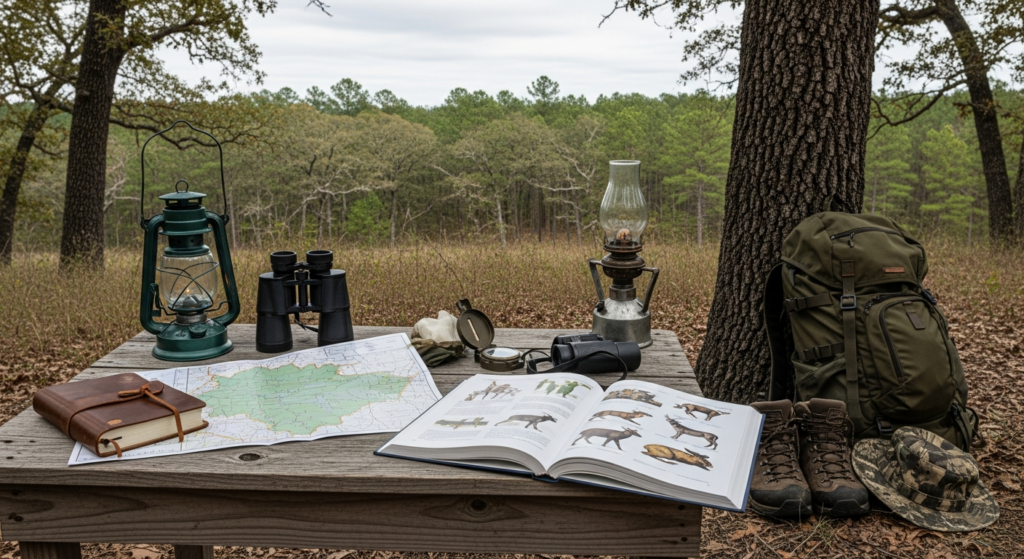
Equipping oneself properly is another cornerstone of the guide’s advice. A core set of equipment is recommended for all new hunters to ensure safety, comfort, and effectiveness in the field. This includes a legal weapon, whether a rifle, shotgun, or compound bow, accompanied by sufficient practice ammunition or arrows to ensure proficiency. Essential personal gear includes the required licenses and tags, hunter orange clothing where mandated for visibility and safety, and a pair of broken-in, comfortable boots suitable for varied terrain. Layered clothing is advised to adapt to changing weather conditions, particularly during the typically warm late summer and early fall months in the Piedmont region. Other vital items for a day in the field include binoculars for scouting, a day pack to carry essentials, an adequate supply of water, high-calorie snacks, a headlamp with extra batteries for low-light conditions, a sharp knife for field dressing, and a comprehensive first-aid kit for emergencies.
For those considering purchasing new equipment, the guide provides approximate cost estimates. An entry-level rifle with a basic scope might range from $450 to $800, while a shotgun suitable for deer or small game could cost between $350 and $700. A compound bow package, often including accessories like a sight and quiver, is estimated at $400 to $900. Basic clothing layers and durable boots are projected to cost $200 to $400, and a decent pair of entry-level binoculars can be acquired for $100 to $250. These figures offer a realistic financial outlook for new hunters in Rock Hill planning their initial gear investments.
Safety is paramount, and the guide dedicates significant attention to firearm handling and elevated hunting. It reiterates the four fundamental rules of firearm safety: always treat every firearm as if it were loaded, always keep the muzzle pointed in a safe direction, keep your finger off the trigger until your sights are on the target and you are ready to shoot, and always be sure of your target, what is in front of it, and what is beyond it. For hunters utilizing elevated stands, the guide strongly advises the use of a full-body harness, a lineman’s belt for climbing, and a lifeline to maintain continuous attachment to the tree, significantly reducing the risk of falls.
After a successful hunt, proper fieldcraft and recovery are essential for meat quality and legal compliance. The guide recommends tagging the animal immediately according to state law, which in South Carolina typically involves attaching the tag to the carcass. Rapid cooling of the meat is critical, especially during the warmer periods of the hunting season, to prevent spoilage. Keeping the meat clean during field dressing and transport is also emphasized. Hunters must follow species- and state-specific rules for field dressing and transport, which may include leaving certain parts attached for identification purposes. For those opting for professional processing, costs are estimated to be around $80 to $200 or more per animal, depending on the species and services requested.
Why it matters in Rock Hill
This comprehensive guide offers critical insights for residents of Rock Hill and York County who are considering hunting as a recreational pursuit. With the Catawba River and Lake Wylie offering a backdrop for various outdoor activities, and numerous tracts of land throughout York County, the region presents opportunities for hunting. The advice on education, safety, and equipment directly impacts the preparedness of local individuals, ensuring they can participate responsibly and safely. Furthermore, the economic activity generated by hunters purchasing gear, licenses, and potentially professional processing services supports local businesses, contributing to the broader economy of the City of Rock Hill and its surrounding areas. Adherence to these guidelines helps maintain ethical hunting practices and supports wildlife conservation efforts that benefit the entire Piedmont region. This focus on responsible participation aligns with Rock Hill’s broader identity as a community that values outdoor sports and natural resources. The guide’s principles are vital for ensuring that hunting remains a sustainable and respected activity for current and future generations in the area.