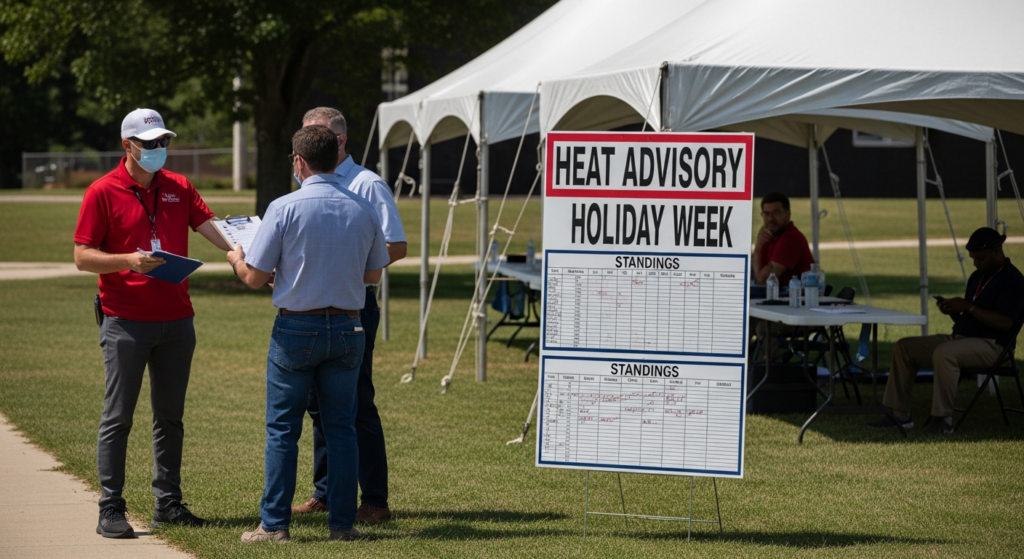
As the July 4th holiday period approaches, independent U.S. weather coverage indicates a significant risk of dangerous heat across multiple states. This forecast is prompting a renewed focus on public safety, particularly concerning outdoor activities and the strain on energy grids. Regional forecasts and local reporting are highlighting practical actions residents can take to mitigate the effects of extreme heat.
Forecasters are advising individuals to be mindful of heat stress and to prioritize hydration. This includes drinking plenty of water, avoiding strenuous outdoor activities during the hottest parts of the day, and recognizing the signs of heat-related illnesses such as heat exhaustion and heatstroke. Vulnerable populations, including the elderly, young children, and those with pre-existing health conditions, are particularly at risk and may require additional checks from neighbors and community members.
Outdoor event organizers and individuals planning celebrations are being encouraged to adjust their schedules and activities to account for the anticipated high temperatures. This could involve moving events to earlier or later times of the day, providing ample shade and cooling stations, and ensuring access to water.
The potential for widespread high temperatures also raises concerns about the stability of the nation’s energy grid. Increased demand for air conditioning can place a significant load on power systems, and authorities are urging vigilance in grid planning and management to prevent outages. While specific local forecasts for Rock Hill will be crucial in the coming days, the broader national outlook suggests a need for preparedness.
Residents are reminded that heat-related illnesses can develop quickly and can be severe. Taking proactive steps to stay cool and hydrated is essential for enjoying the holiday safely. This includes checking on neighbors, especially those who may be more susceptible to heat.
As the holiday week unfolds, staying informed about local weather conditions and advisories will be key. Adjusting plans and prioritizing safety can help ensure a healthy and enjoyable celebration despite the challenging weather outlook.