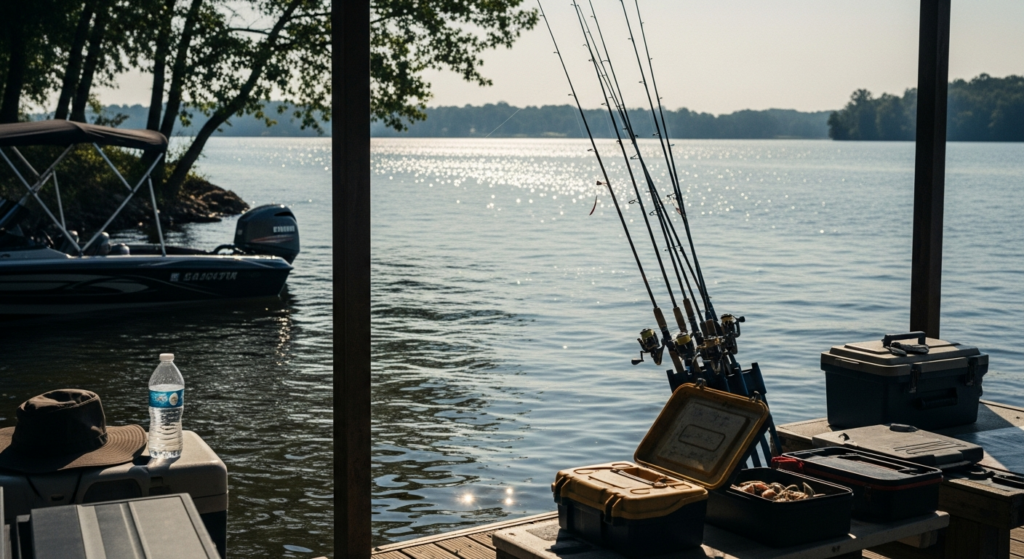
As summer continues its hold on the Piedmont region, local authorities and health experts are emphasizing the critical importance of safety for individuals engaging in outdoor activities, particularly fishing. A recently highlighted safety guide provides detailed recommendations for anglers to mitigate risks associated with sun exposure, dehydration, and other heat-related illnesses, which are particularly prevalent during the warmer months in Rock Hill and surrounding York County.
The guide underscores that the sun’s ultraviolet (UV) rays pose a significant threat, especially between 10 AM and 4 PM, when their intensity is at its peak. During these hours, the sun’s angle allows for more direct and potent radiation to reach the Earth’s surface. For anglers, this risk is compounded by the reflective properties of water surfaces, which can bounce back up to 15% of UV radiation. This reflection effectively exposes individuals to UV rays from multiple directions, increasing the likelihood of sunburn and long-term skin damage. Understanding these peak times and environmental factors is the first step in developing a robust sun protection strategy, crucial for anyone spending extended periods on or near Rock Hill’s numerous waterways, such as Lake Wylie or the Catawba River.
To combat the pervasive threat of UV radiation, the guide strongly recommends the consistent and correct application of broad-spectrum sunscreen. Anglers should select a product with a Sun Protection Factor (SPF) of at least 30, with SPF 50 or higher being preferable for those anticipating prolonged exposure to water. The efficacy of sunscreen hinges on proper application: it should be applied generously to all exposed skin approximately 30 minutes before venturing outdoors. Furthermore, reapplication is not a one-time event; it is advised every two hours, or more frequently if an individual is sweating heavily, has been splashed, or has been in the water. This diligent approach ensures a continuous barrier against harmful UV rays, protecting against both immediate sunburn and the cumulative effects that contribute to more serious health concerns over time.
Beyond topical protection, appropriate attire plays a pivotal role in safeguarding against the summer sun. The guide advises wearing lightweight, long-sleeved clothing that is rated for Ultraviolet Protection Factor (UPF). These specialized fabrics are designed to block a significant portion of UV radiation, offering a more reliable defense than standard clothing. Light-colored garments are also recommended, as they tend to reflect sunlight rather than absorb it, helping to keep the body cooler. Headwear is equally important; a wide-brimmed hat that provides at least four inches of coverage around the entire head and neck offers crucial shade. Completing the protective ensemble, polarized sunglasses with 100% UV protection are essential for shielding the eyes from both direct and reflected glare, preventing eye strain and potential long-term damage.
Maintaining adequate hydration is perhaps the most fundamental aspect of summer safety, particularly for physically active pursuits like fishing. The guide emphasizes a proactive hydration strategy, recommending that individuals begin drinking water the night before their fishing excursion. During active fishing, it suggests consuming at least eight ounces of water every 15 to 20 minutes. This consistent intake helps to replenish fluids lost through sweating and maintain the body’s core functions. Conversely, the guide strongly advises against beverages high in caffeine or alcohol. These substances act as diuretics, accelerating fluid loss and counteracting hydration efforts, thereby increasing the risk of dehydration in the summer heat.
Recognizing the early signs of dehydration is crucial for preventing more severe health complications. The initial indicators often include increased thirst, a dry mouth, decreased frequency of urination, and a general sense of fatigue. These symptoms serve as the body’s warning signals that fluid levels are dropping. If these early signs are ignored, dehydration can progress, leading to more serious manifestations such as dizziness, a rapid heartbeat, and confusion. Anglers should be acutely aware of these symptoms in themselves and their companions, as prompt action—such as moving to a cooler environment and rehydrating—can prevent a minor discomfort from escalating into a medical emergency.
Heat stroke represents the most severe form of heat-related illness and requires immediate medical intervention. The guide outlines key symptoms, which include a dangerously elevated body temperature, typically above 103°F. Individuals experiencing heat stroke may exhibit an altered mental state, ranging from confusion and disorientation to irritability or even unconsciousness. While hot and dry skin is a classic sign, it is important to note that sweating may still occur in some cases. A rapid and strong pulse is another common indicator. The guide unequivocally states that if heat stroke is suspected, 911 must be called immediately. While awaiting emergency services, aggressive cooling measures should be initiated, such as moving the individual to shade, applying cool water to the skin, and fanning them to promote evaporative cooling.
For those venturing out onto the water in boats, additional safety considerations are paramount. Before departure, it is essential to conduct a thorough check of the boat’s engine cooling system to prevent overheating and potential breakdowns. All required safety equipment, including life jackets, fire extinguishers, and signaling devices, must be onboard and in good working order. Filing a float plan with a trusted person on shore, detailing the intended route, duration, and number of passengers, is a vital precaution that can aid search and rescue efforts if an emergency arises. Furthermore, carrying extra water and emergency supplies, such as a VHF radio for communication, is highly recommended. The guide suggests having at least one gallon of water per person per day for emergencies, ensuring sufficient hydration even if unforeseen delays occur on Lake Wylie or other expansive waterways.
Why it matters in Rock Hill
For residents of Rock Hill, where outdoor recreation, particularly fishing, is a popular summer pastime along the Catawba River and Lake Wylie, adherence to these safety guidelines is not merely advisable but essential. The summer months bring sustained high temperatures and humidity, increasing the risk of heat-related illnesses for anyone spending time outdoors. Local institutions like Piedmont Medical Center are equipped to handle emergencies, but preventive measures outlined in this guide can significantly reduce the strain on emergency services and ensure that recreational activities remain safe and enjoyable for families and individuals across neighborhoods like Riverwalk and Manchester Village. Prioritizing these precautions helps safeguard the well-being of the community and allows for continued enjoyment of Rock Hill’s natural assets throughout the season.