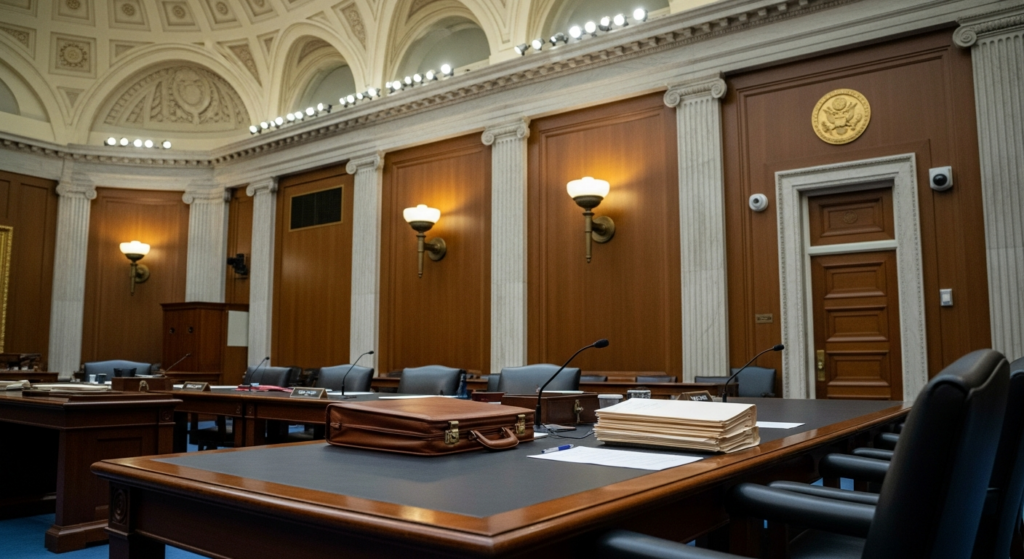
Supreme Court Justices Elena Kagan and Amy Coney Barrett were scheduled to testify before a congressional panel this week, addressing the high court’s budget and security requirements. The appearance marked a rare public budget-related hearing involving sitting Supreme Court justices, offering a glimpse into the operational needs of the nation’s highest judicial body.
Such hearings typically involve court administrators, not the justices themselves, making the testimony from Justices Kagan and Barrett a notable event in the ongoing dialogue between the judicial and legislative branches. The decision by two sitting justices to appear before a legislative body for budgetary discussions is not unprecedented but remains an infrequent occurrence, typically reserved for moments when the Court seeks to directly communicate its needs or address specific concerns regarding its operational capacity or public perception.
The discussions centered on the financial allocations necessary to maintain the Court’s functions, including staffing, technology, and facility upkeep. Beyond operational costs, a significant portion of the testimony focused on the critical security measures required to protect justices and court personnel. Security concerns for the judiciary have intensified in recent years, encompassing not only the physical protection of court facilities and personnel but also the digital security of sensitive information and the personal safety of justices and their families. These considerations were undoubtedly central to the discussions led by Justices Kagan and Barrett.
While the immediate focus of the congressional hearing was on the federal judiciary, the principles of judicial independence, adequate funding, and robust security resonate throughout the entire legal system, including state and local courts. In Rock Hill, the York County judicial system operates daily, handling a wide array of civil and criminal cases that directly impact residents. The efficient functioning of these courts, from the York County Courthouse to municipal courts, relies on consistent budgetary support and appropriate security protocols.
The legal community in Rock Hill, comprising attorneys, paralegals, and court staff, forms a vital part of the city’s professional landscape. Institutions like Winthrop University contribute to this ecosystem by educating future legal professionals, underscoring the continuous need for a stable and respected judicial framework. The legal landscape in Rock Hill is robust, with numerous law firms, public defenders, and prosecutors working within the York County court system. The integrity and safety of these local legal professionals and the institutions they serve are paramount for maintaining public trust in the administration of justice. Discussions at the federal level, while distinct, often set a tone and precedent for how judicial systems at all levels approach these fundamental issues.
The testimony of Justices Kagan and Barrett, therefore, serves as a reminder of the foundational importance of the judiciary’s operational health, a concern that extends from the Supreme Court’s chambers in Washington D.C. to the courtrooms of Rock Hill.
### Why it matters in Rock Hill
The discussions initiated by Justices Kagan and Barrett, though focused on the federal judiciary, carry a broader resonance for Rock Hill. The stability and security of judicial institutions are fundamental to the rule of law, impacting everything from local governance to the daily operations of the York County judicial system. For residents and the legal professionals who serve them, the integrity of the courts, whether federal or local, is a shared concern. The City of Rock Hill, through its own legal departments and its support for public safety, implicitly relies on the broader framework of a well-functioning and secure justice system. This federal dialogue underscores the continuous investment required to uphold the principles of justice that are essential for any community, including Rock Hill.