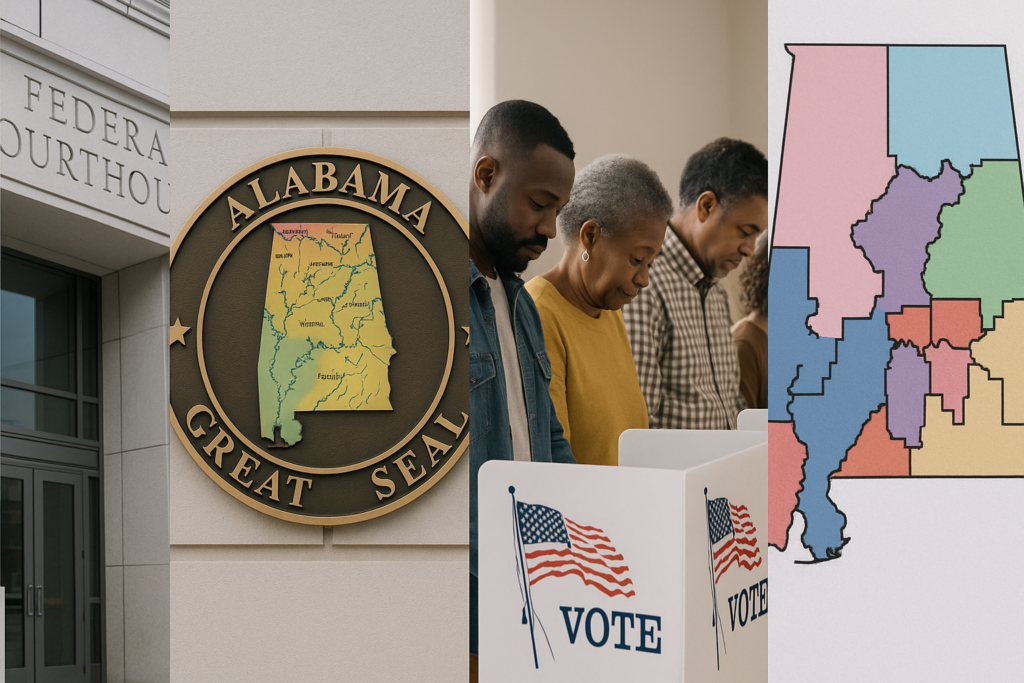
In a significant ruling with implications for voter representation, a three-judge federal panel in Birmingham has blocked Alabama from using its 2023 Republican-drawn congressional map, determining that it ‘intentionally discriminated based on race.’ The panel highlighted that the map only included one district with a majority-Black population, despite Black residents making up approximately 27 percent of the state’s population.
The decision mandates that Alabama Secretary of State Wes Allen administer the 2026 midterm elections using a court-drawn map, the same one that was utilized in the 2024 election. This ruling comes after the U.S. Supreme Court had previously vacated the panel’s earlier injunction and instructed a re-evaluation of the case in light of a recent ruling regarding discrimination claims in Louisiana. Despite the heightened scrutiny, the panel reaffirmed its initial conclusion regarding the discriminatory nature of Alabama’s map.
Alabama’s Republican Governor Kay Ivey had already scheduled special primaries for August 11, 2026, using the controversial map, which is now blocked. In response to the ruling, Alabama Attorney General Steve Marshall has appealed to the Supreme Court, requesting an emergency intervention by June 1, 2026, to allow the state to proceed with its legislatively drawn map for the upcoming November elections.
The implications of this ruling are significant, particularly concerning the balance of power in the U.S. House of Representatives. The court’s 2024 map had previously led to the election of Shomari Figures, a Black Democratic representative, in a district that would revert to Republican control under the state’s preferred 2023 map. This shift in representation underscores the stakes involved in the ongoing legal battles over congressional districting in Alabama.
As the situation develops, the outcome of Alabama’s appeal to the Supreme Court could have lasting effects on the state’s political landscape and the representation of Black voters in Congress. The ruling has drawn attention from various voting rights groups, who view it as a victory against discriminatory practices in electoral mapping. The case continues to highlight the critical intersection of race, politics, and representation in the United States today.